Why is there ice damming on my roof in Rochester
Ice dams form when warm attic air melts snow that refreezes at your eaves. Here's why Rochester roofs get them and how to stop the damage.
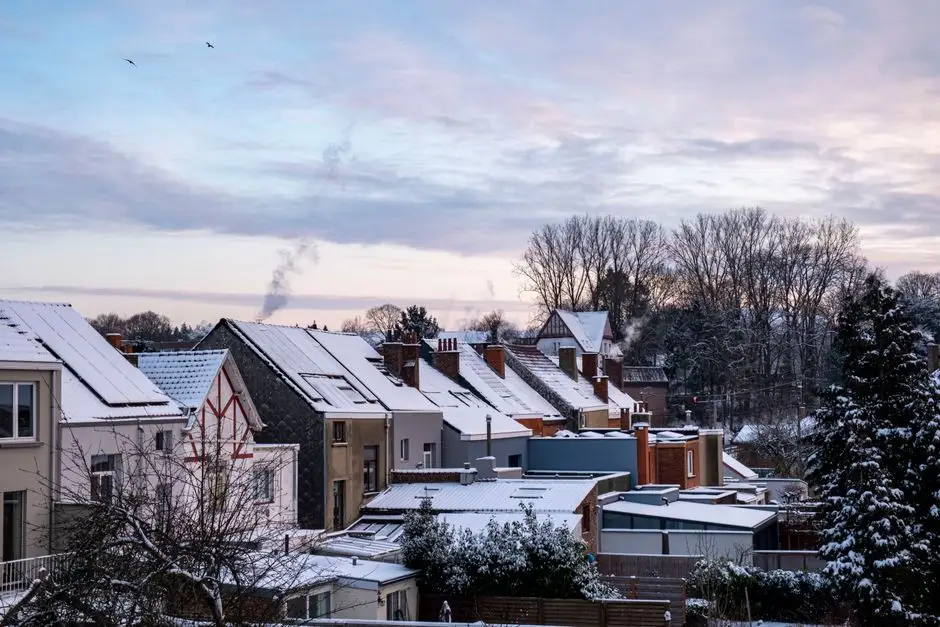
Ice damming on your Rochester roof happens because heat escaping from your attic melts snow on the upper roof, and that meltwater refreezes when it hits the cold eaves. The result is a ridge of ice that traps water behind it, forcing it under shingles and into your ceilings, walls, and insulation. Rochester's freeze-thaw cycles - often 40 to 60 of them between November and March - make this one of the most common winter roofing problems we see. This post explains exactly why it happens on Rochester roofs, how to remove an ice dam safely, how to prevent the next one, and when the damage is serious enough to call us.
Why Rochester Roofs Get Ice Dams
Rochester sits in one of the snowiest and most freeze-thaw-prone corridors in New York State. Lake Ontario moisture, prevailing northwest winds, and overnight lows that routinely drop into the teens and single digits combine to keep snow sitting on roofs for weeks at a time. That long snow cover is the raw material for ice dams.
Ice damming on a Rochester roof is a heat problem, not a snow problem. Snow itself does not cause ice dams. A roof that stays uniformly cold from ridge to eave will shed snow slowly and safely. A roof with a warm patch near the ridge and a cold overhang will grow an ice dam every single winter, no matter how well it was shingled.
Most homes in Rochester's older neighborhoods - the Park Avenue area, Maplewood, the 19th Ward, Irondequoit, and the towns east of the city - were built before 1960 with attic ventilation that was adequate for the era but nowhere near what modern insulation and air-sealing demand. When we inspect these roofs, we usually find three or four inches of old fiberglass batts, unsealed top plates, and a bath fan venting straight into the attic. That combination is a factory for ice dams.
If you own an older home and you have watched ice build up along the same eave for three winters running, the roof itself is rarely the root cause. The attic is. Our team handles roofing in Rochester every winter and the pattern is consistent: same neighborhoods, same construction era, same diagnosis.
What Causes Ice Dams on Rochester Roofs
Ice dams on Rochester roofs form when three conditions line up at the same time: snow on the roof, attic heat melting the underside of that snow, and sub-freezing air at the eaves refreezing the meltwater. Remove any one of the three and the dam cannot form.
Here is what we actually find when we open up an attic in a Rochester home with chronic ice dams:
- Warm attic air. Insulation that has been compressed, wet, or simply never brought up to modern R-values lets heat pour through the ceiling. A Rochester attic in January should be within 5 to 10 degrees of outdoor air. When we measure 40 degrees up there, we know exactly where the ice dam is coming from.
- Air leaks at the ceiling plane. Every recessed light, plumbing stack, chimney chase, and attic hatch is a hole. Warm moist air pushes through those holes, hits the cold roof deck, and melts snow from underneath.
- Poor or blocked ventilation. Soffit vents clogged with insulation, ridge vents that were never cut through, and gable vents that do not move enough air all trap heat in the attic.
- Ductwork in the attic. If your furnace or AC ducts run through the attic and they are not sealed and insulated to at least R-8, they leak heat directly onto the roof deck.
- Chimneys and exhaust flues. A masonry chimney that passes through the attic radiates heat in a ring around itself. That ring is where the first ice dam shows up every year.
- Dark shingles and sun exposure. South-facing roof planes in Rochester get enough low-angle winter sun to melt snow even when the air is below freezing. That meltwater runs down to the cold eave and freezes.
We also see ice dams on roofs that were replaced recently. New shingles do not fix an attic problem. If the underlying heat loss and ventilation issues were not addressed during the install, the new roof will dam just like the old one - sometimes worse, because a tighter roof deck traps more heat.
How to Remove Ice Dams from Your Roof in Rochester
Ice dam removal in Rochester should be done from the ground or from a ladder with the right tools - never by chopping at the ice with an axe, a hammer, or a shovel. You will destroy shingles, and you can put a tool straight through the roof deck.
What works, in order of safety:
- Stop the water first. If water is already coming into the house, the priority is to get it out of the ceiling, not to fight the ice. Poke a small drain hole in the bulging drywall, catch the water in a bucket, and call us.
- Use calcium chloride ice melt in pantyhose. Fill a leg of pantyhose with calcium chloride (not rock salt, which damages shingles and kills grass), lay it vertically across the ice dam so it crosses the eave, and let it melt a channel. This takes 12 to 24 hours and is the safest DIY method.
- Steam it off. A professional ice dam removal crew uses low-pressure steam to cut the dam into channels without touching the shingles. This is the method we use on Rochester roofs because it works at any temperature and does not damage the roof.
- Do not chip, salt, or pressure-wash. Chipping cracks shingles. Rock salt corrodes flashing and nails. Pressure washing drives water under every course.
Once the immediate ice is gone, the water damage inside the house has to be dealt with. Wet insulation, stained drywall, and moldy sheathing do not dry out on their own in a Rochester January. We handle roof repair in New York for ice dam damage - replacing saturated decking, re-flashing valleys and penetrations, and resealing the areas where water got in.
How to Prevent Ice Dams in Rochester NY
Preventing ice dams in Rochester NY comes down to keeping the roof deck cold and giving meltwater a clear path off the roof. You can do some of this yourself. Some of it needs a contractor.
What you can do this fall
- Clear gutters and downspouts before the first hard freeze. A full gutter backs water up under the drip edge and starts the ice dam at the fascia.
- Pull snow off the lower three to four feet of roof with a roof rake after every storm over six inches. Do this from the ground. Never walk a snow-covered roof.
- Keep the attic hatch closed and insulated. An open hatch dumps warm house air straight into the attic.
- Do not block soffit vents with stored boxes, insulation, or holiday decorations.
What a contractor needs to do
- Air-seal the ceiling plane. Foam every top plate, wire penetration, can light, and chimney chase. This is the single highest-impact fix.
- Bring attic insulation up to R-49 or better. That is the current DOE recommendation for our climate zone. Most Rochester attics we open are between R-11 and R-19.
- Fix ventilation. We aim for a balanced system - soffit intake matched to ridge or upper exhaust - with at least 1 square foot of net free vent area per 150 square feet of attic floor.
- Install ice and water shield. A self-adhering membrane along the eaves and in valleys is code-required on new roofs in New York and is the last line of defense when an ice dam does form.
- Add a secondary layer of protection at the eave. On problem roofs we sometimes recommend a metal drip edge and a wider ice-and-water membrane course - 36 inches instead of the standard 24.
If your roof is at the end of its life and you are going to replace it anyway, this is the moment to fix the attic at the same time. We do roof replacement in New York with ice-and-water membrane installed to the full eave and into every valley, and we coordinate the attic work so the new roof is not fighting the same heat loss that killed the old one.
Common Mistakes Rochester Homeowners Make
The most expensive ice dam mistakes we see in Rochester are the ones homeowners make trying to fix the problem themselves in January.
- Chopping the ice with an axe or chisel. This is how roofs get holes. We have replaced entire eave sections because of it.
- Using rock salt. Sodium chloride eats asphalt shingles, corrodes aluminum gutters and flashing, and kills the shrubs below. Use calcium chloride only.
- Climbing onto a snow-covered roof. Every winter we hear about a Rochester homeowner who fell. The roof is not worth it. Work from the ground or call us.
- Assuming a new roof will fix it. It will not. If the attic is still warm, the new roof will dam too.
- Ignoring the interior damage. A brown ceiling stain in February is a wet insulation and mold problem by April. Fix the water intrusion, then dry and repair the interior.
- Heat cables as a permanent fix. Heat tape can open a channel, but it does not address the heat loss causing the dam. It is a band-aid, and it costs real money to run all winter.
When to Call a Professional
Call a professional when water is actively coming into the house, when the ice dam is thicker than about four inches, when the dam runs more than a few feet up the roof, or when you cannot safely reach the eave from the ground. Those are the four triggers.
You should also call if the same eave dams every winter. That is a diagnostic problem, not a removal problem, and it needs an attic assessment and a roofing plan. Our team at Roofnexa NY handles ice dam removal, roof repair, and the attic work that stops the next one. We start with a roof inspection in New York so we can show you exactly where the heat is escaping and where the water is getting in - not guess at it.
If you are not sure whether your roof needs a repair or a full replacement, we will tell you straight. We would rather fix a $900 problem than sell you a $14,000 roof you do not need yet.
Frequently Asked Questions
Why is there ice damming on my roof in Rochester?
Ice damming on a Rochester roof is caused by warm attic air melting snow on the upper roof while the eaves stay below freezing. The meltwater refreezes at the cold overhang, builds a ridge of ice, and traps water that backs up under the shingles. Rochester's 40 to 60 annual freeze-thaw cycles make it worse than most markets.
How do I remove ice dams from my roof in Rochester?
The safest DIY method is calcium chloride in a pantyhose leg laid vertically across the dam - it melts a channel in 12 to 24 hours. For dams thicker than four inches or any active leak, call a pro who uses low-pressure steam. Never chip at ice with a tool.
How do I prevent ice dams in Rochester NY?
Air-seal the attic ceiling, bring insulation to R-49 or better, balance soffit and ridge ventilation, and install ice-and-water membrane along the eaves. Keep gutters clear and rake the lower three to four feet of snow after heavy storms. Those steps stop 90 percent of ice dams.
Who fixes ice dam damage in Rochester?
A licensed roofing contractor handles the roof side - replacing wet decking, re-flashing, and resealing penetrations. Interior drywall, insulation, and mold work is usually handled by a restoration contractor. Roofnexa NY handles the roofing portion and can coordinate the rest.
How much does ice dam repair cost in Rochester in 2026?
Typical 2026 pricing in the Rochester area runs $400 to $900 for steam removal on a single-family roof, $600 to $2,500 for roof repair from ice dam damage, and $2,500 to $6,000 for attic air-sealing and insulation work that prevents the next one. Full roof replacement, if needed, starts around $9,000.
Get Help with Roofing in Rochester
If ice is already backing water into your ceilings, or if the same eave dams every winter, we can stop it. Roofnexa NY removes ice dams, repairs the damage, and fixes the attic problems that cause them.
Call us at (315) 503-7248 and we will get someone out to look at your roof.